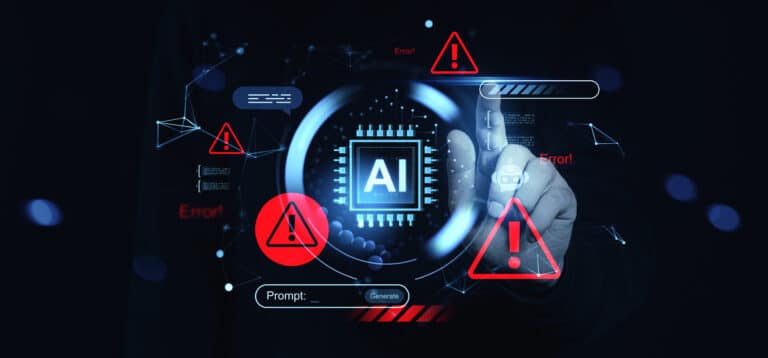

AI-powered social engineering is the fastest-growing threat facing Los Angeles businesses in 2026. Today, attackers use AI to create lifelike deepfakes, clone executive voices, and send phishing emails that slip past older security tools. As a result, every business leader needs to understand how these attacks work and how to stop them. The good news is that with the right plan in place, you can protect your team, your data, and your bottom line.
What AI-Powered Social Engineering Means for California Businesses
In simple terms, AI-powered social engineering uses smart software to trick employees into sharing data, sending money, or giving access to systems. Unlike older phishing scams that use the same generic email for everyone, these new attacks are custom-built. For example, the AI studies how your team writes, how your leaders speak, and what your business sounds like from the outside.
Then, attackers use that input to create fake videos of your CEO asking for a wire transfer, fake voice calls from your IT team asking for passwords, or fake emails that mention real projects and real coworkers. In short, the tools have gotten so good that telling real from fake now takes special software and trained eyes.
For Los Angeles businesses, the risk keeps growing. After all, attackers can pull endless info from LinkedIn, company sites, and social media to build a believable cover story.
Why AI Social Engineering Defense Matters for Los Angeles Companies
According to IBM’s 2025 Cost of a Data Breach Report, the average loss from one AI-driven social engineering attack is $4.4 million. On the other hand, companies that use AI in their defenses saved an average of $1.9 million per incident. In other words, AI cuts both ways, and the side you choose makes a real dollar difference.
Beyond direct theft, these attacks expose customer data, trade secrets, and other private files. In California, the CCPA and CPRA add more pain on top, with fines of up to $7,500 per willful violation. As a result, the legal cost can rival the direct loss.
The damage to your name is harder to measure but just as real. Furthermore, when news of a breach spreads through the Los Angeles business community, customer trust takes a hit and new deals get harder to close. In fact, many large clients now require proof of social engineering defenses before they sign a contract.

Common AI-Powered Social Engineering Tactics Targeting Los Angeles Businesses
Below are the most common AI-driven tactics used against Los Angeles companies today.
AI Voice Cloning (Vishing). First, attackers clone the voice of a leader, IT worker, or vendor. Then, they call your team and ask for a wire transfer or a password reset. They only need a few seconds of public audio to pull this off, often from a podcast, earnings call, or video clip.
Deepfake Video Attacks. Next, attackers create fake video clips that appear to show a real leader making a request. Sometimes they use a live deepfake in a virtual meeting. Other times, they send a pre-recorded clip to push through a fake order.
AI-Enhanced Phishing Campaigns. In addition, attackers feed your public emails, web copy, and team bios into an AI tool. As a result, the phishing email that lands in your inbox sounds just like an email from someone on your team, mentions real projects, and uses your in-house terms.
Prompt Injection Attacks. Moreover, if your business uses AI chatbots or assistants, attackers can plant hidden commands that trick the AI into ignoring its safety rules. In turn, this can expose private data or grant access without your team noticing.
Synthetic Identity Creation. Finally, attackers blend real and fake details to build a believable fake person. Then, they use that identity to slip into your network, build trust, and run a long-term scam.
Essential Components of AI Social Engineering Defense
To start, build a multi-layer process to verify identity through more than one channel before any high-stakes action. For instance, require a callback to a known phone number, not a number the requester gave you, before approving any wire transfer.
Next, deploy AI-powered detection tools that scan voice, video, and email for signs of fake content. These tools spot small clues, like odd lighting, mismatched audio, or strange metadata, that the human eye and ear often miss.
After that, set clear steps for high-risk actions, including wire transfers, password resets, and any request for private data. For example, require two approvers and a second-channel check before money moves.
Just as important, train your team often, and train them on real AI threats, not the basic phishing scams from years past. Show them how voice cloning works. Walk them through real cases. Make sure they feel safe pushing back on an urgent request, even when it appears to come from the top.
Lastly, move toward a zero-trust setup. In other words, trust no user or device by default. Instead, check every request, every time, and limit each account to only what it needs.
How to Protect Your Los Angeles Organization from AI Social Engineering
Here is a clear, step-by-step path you can follow to lock down your business.
- Run an AI threat check to see how much of your data, voice, and video is already public and how easy it would be for an attacker to clone or fake.
- Roll out deepfake detection tools that scan video, audio, and metadata for signs of fake media.
- Set verify-then-act rules for any money move, password change, or data request.
- Train your team often on AI-driven threats with real examples and short, frequent sessions.
- Watch for early warning signs, such as odd LinkedIn outreach or fake profiles studying your leaders.
- Build an incident response plan that lays out exactly what to do when an attack is suspected.
- Bring in a security partner that offers 24/7 monitoring and AI-powered threat detection.
How to Protect Your Los Angeles Organization from AI Social Engineering
Conduct AI threat assessment evaluating your organization’s exposure to voice cloning, deepfakes, and AI-enhanced phishing based on public information availability
Deploy deepfake detection tools using AI-powered systems that analyze visual inconsistencies, audio artifacts, and metadata to identify synthetic media
Establish verification protocols requiring multi-channel confirmation for financial transactions, credential changes, and sensitive data access
Train employees on AI threats providing regular education on voice cloning, deepfakes, and AI-enhanced social engineering tactics with realistic examples
Monitor for reconnaissance activities tracking unusual information gathering attempts, suspicious LinkedIn activity, or social media profiling of executives
Develop incident response procedures establishing clear protocols for responding to suspected AI social engineering attempts, including investigation and notification steps
Partner with AI security specialists leveraging managed security services that provide 24/7 monitoring and AI-powered threat detection

The Real Cost of AI Social Engineering Attacks for California Businesses
Direct theft from these attacks ranges from hundreds of thousands of dollars to millions per case. In one well-known case, a single voice-clone CEO scam led to a wire transfer of over $25 million.
Beyond the cash, your business also faces fines when private data leaks. For example, the CCPA allows damages of $100 to $750 per affected person. As a result, a breach that touches a few thousand customers can quickly grow into a multi-million-dollar bill.
In addition, recovery costs add up fast. Forensic teams, legal fees, credit monitoring, and system fixes often run three to five times the size of the direct loss.
On top of all that, the damage to your name affects every part of the business. Customers leave. Deals stall. Partners ask harder questions. Furthermore, your cyber insurance bill often jumps after an incident, and some insurers refuse to cover future attacks at all.
In short, the full cost of one attack is almost always much higher than the headline number.

Frequently Asked Questions About AI-Powered Social Engineering
How can I tell if a video call is a deepfake? Look for off-kilter eye movement, odd lighting, audio that does not match the lips, or strange requests. Also, always confirm any high-stakes request on a known second channel. As a final layer, modern deepfake detection tools spot signals the human eye cannot.
What makes AI social engineering more dangerous than traditional phishing? First, AI studies how your team writes and talks, so the fake message blends right in. Next, voice cloning only needs a few seconds of public audio, so even a phone call is no longer proof of identity.
How much does AI social engineering defense cost? The cost depends on the size of your business and your risk level. However, the price of a full defense, including tools, training, and monitoring, is far less than the cost of one attack. In addition, managed services offer top-tier protection at a fixed monthly rate.
What should employees do if they suspect an AI social engineering attempt? First, stop the chat or call right away. Next, write down what happened and how the request came in. Then, report it to IT through the normal process. Above all, confirm the request through a second channel before taking action, and never feel bad about flagging a suspicious request.
How often should we train employees on AI threats? Train your team every quarter on full topics, and send short monthly updates in between. In addition, run simulated AI-driven phishing tests so the team can practice in a safe setting.
Do AI detection tools generate false positives? Yes, some false alarms happen, but modern tools handle this well. In fact, the cost of checking a false alarm is far lower than the cost of missing a real attack.